
How to Create a Writing Festival?
I had to produce a project for my last year at UHI, and I opted to draft a plan for bringing an annual writing festival to Inveraray. I think it’s not a bad idea, and I would love to make it happen. So, I’m seeking like-minded people who want to meet and discuss the proposal. Below is an abridged version of the report I completed. If it’s something you think is a good idea and a project you’d like to get involved in, get in touch, writerjohnrcampbell@powdermillsbnb.co.uk.
I Write Inveraray
1. Intoduction
This report develops a plan for creating a writers’ festival in Inveraray, Argyll. To be named, I Write Inveraray, the festival is uniquely aimed at unpublished writers, students enrolled in creative writing courses in Scotland, and children living in Argyll. The event will be operated by a charity promoting creative writing by offering regular workshops on writing techniques and microgrants to authors living and working in Argyll to help develop their abilities. This project plan details the workflows required to deliver this event on 9 -11 April 2026.
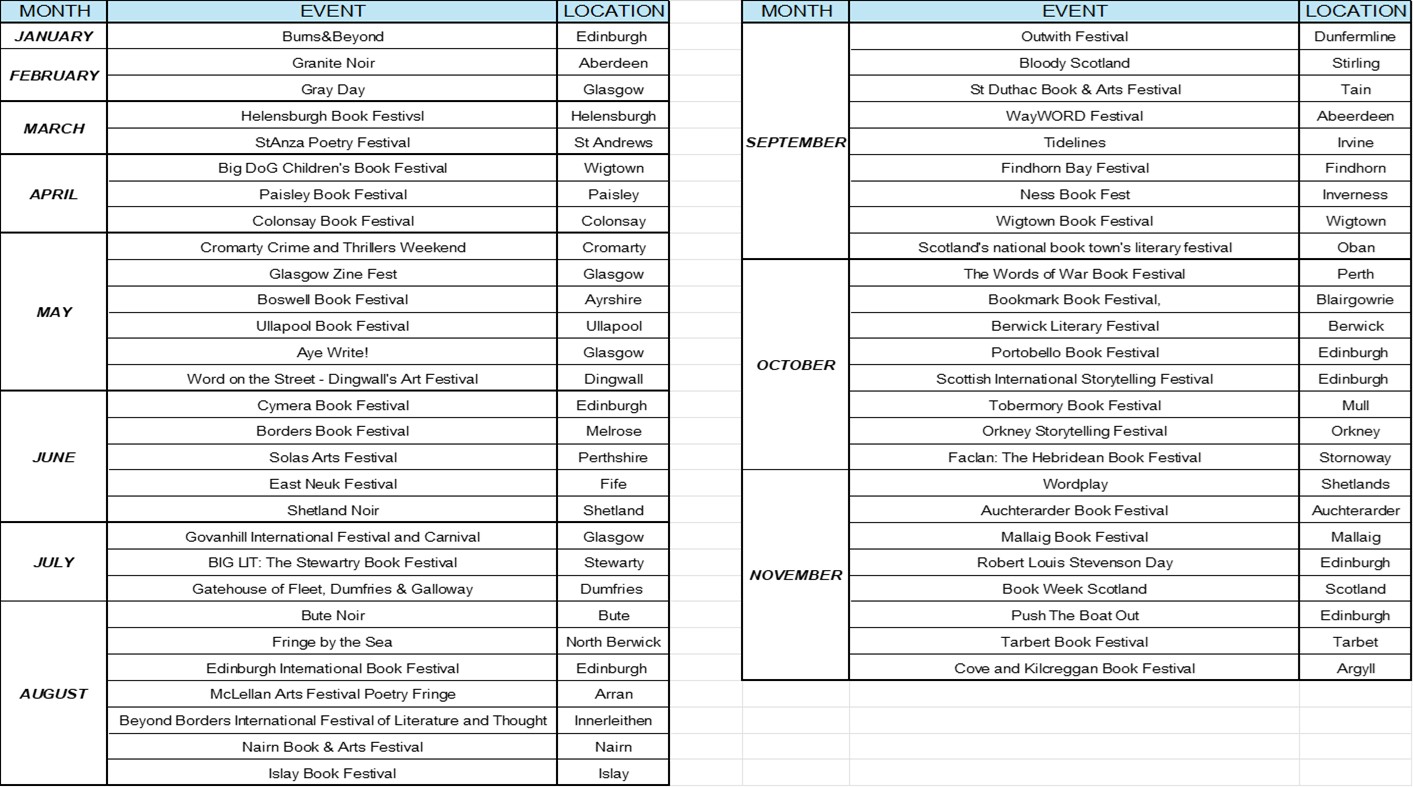
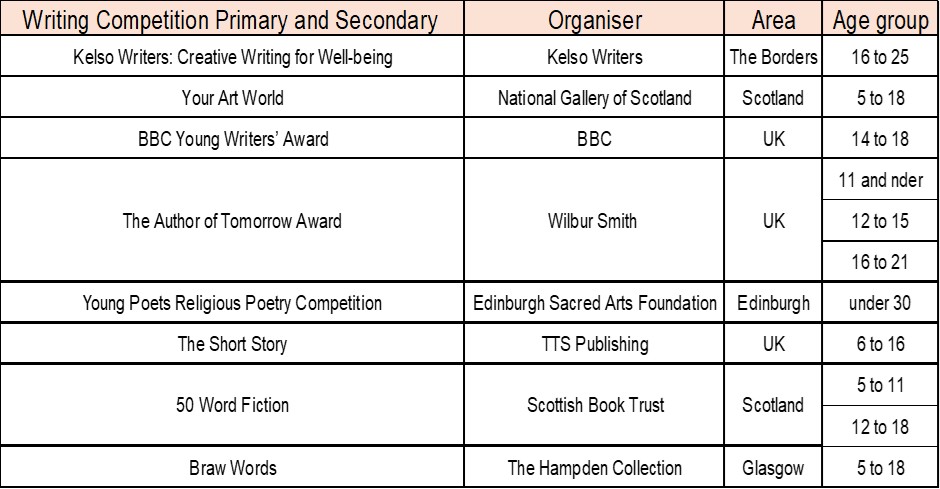
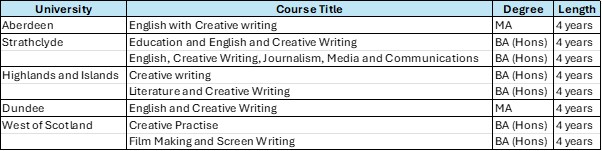
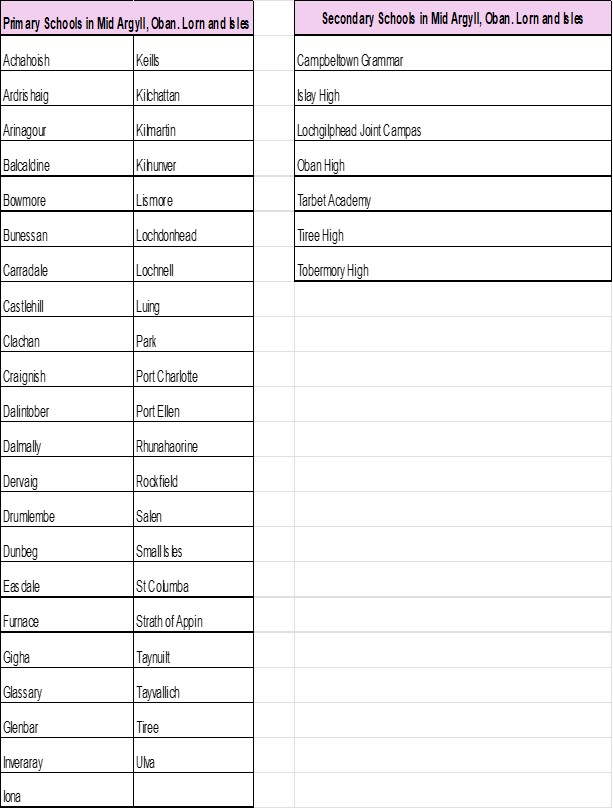
The idea emerged from a review of the Book Festival market in Scotland and the lack of opportunity for unpublished authors to have an event focused on their needs. (See Appendix 1) Argyll has many cultural events, but they are concentrated on music festivals. (Lu, 2015, p. 132) Market research suggested that there was little provision for creative writers in Argyll. (See Appendix 2) Similarly, school children in the region have few outlets to enter and benefit from writing prizes. (See Appendix 3) The festival will offer prizes for primary and secondary schools in Argyll, writers studying creative writing, a Scots language award, and the Neil Munro Prize for the best short story. The overarching theme of all entries is writing about Argyll, or the environment.
The report examines the book festival market in Scotland and those who are readers and would be interested in attending book festivals. Research suggests that the middle classes and women dominate these events. (Driscoll, 2014, p. 162) Consequently, the festival’s primary objective is to increase children’s participation in creative writing and provide educational opportunities to potential authors regardless of class and expectation. The event is designed to be fun, motivating and encouraging for young writers to ‘give it a try.’
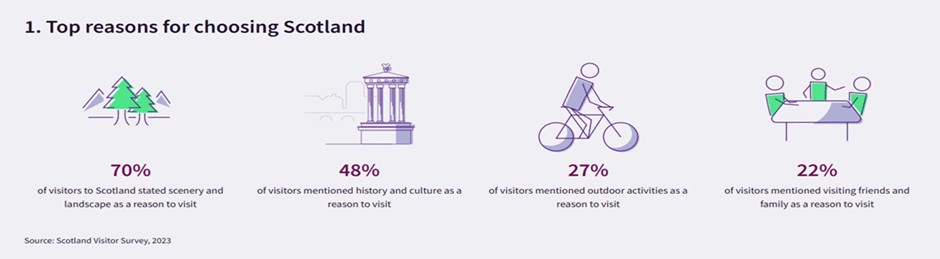
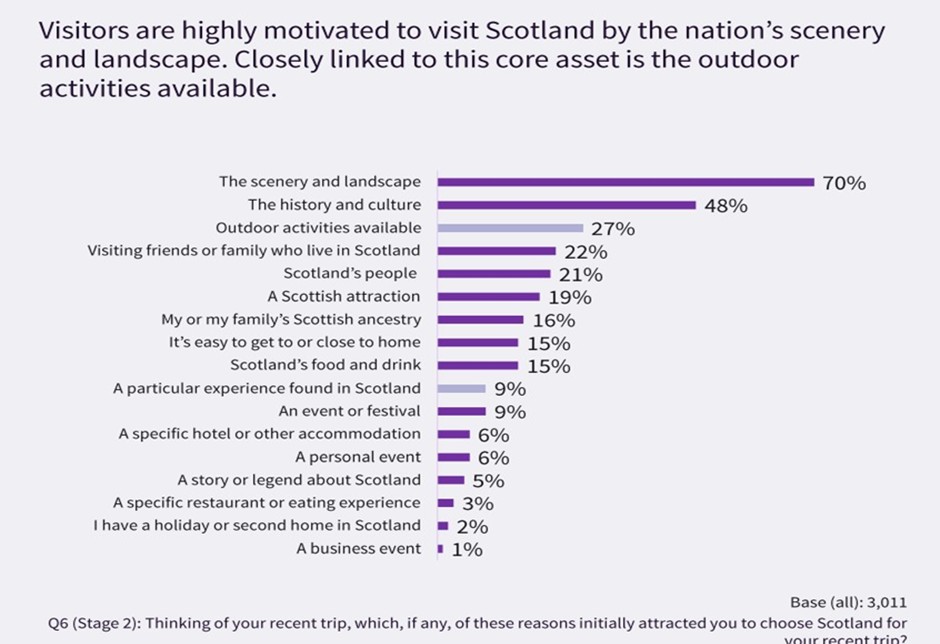
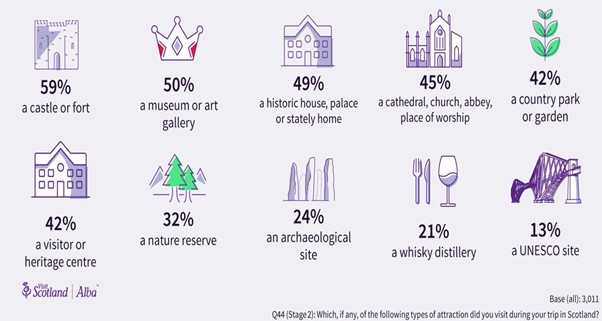
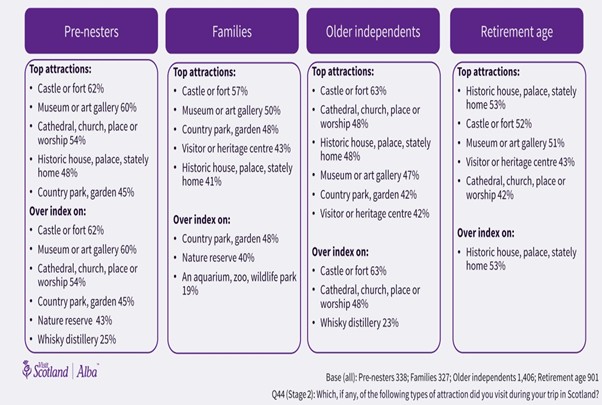
An analysis of the demographics of each market segment is undertaken, and it suggests that Inveraray is an ideal potential market for a writers’ festival, which will ensure good attendance. In addition, market research on visitors to Scotland shows a buoyant demand for cultural events, particularly festivals, for Scottish, UK and overseas visitors. (VisitScotland, 2023) Furthermore, Inveraray is a popular visitor destination and is already the base for music events. (See Appendices 5 & 6) Staging I Write Inveraray will be enhanced by its association with the iconic Inveraray image and brand. Finally, the report develops a marketing plan, a social media campaign, a proposed programme of events, a budget, a revenue plan, and a cash flow.
2. Market Opportunity
The creative industries are one of the fastest-growing sectors in the Scottish economy, having grown by 62% between 2008 and 2017 (Scottish Government, 2019). It is estimated that it contributes over £5 billion to the Scottish Domestic Product and accounts for 4% of the Scottish GDP (Illingworth & Marcella, 2008, p. 1). This vibrant sector is one that the Scottish Government has targeted as one of the economy’s growth sectors.
However, there is an imbalance between the Central Belt and the rural economy. (Munro, 2016, p. 4) This is partly due to demographics affecting Scotland’s rural economy, particularly Argyll and Bute. The population is estimated to drop by 7.2% between 2010 and 2035. (Lu, 2015, p. 131)
2.1 Argyll – Creative Writing
Funding is interventionist, with Creative Scotland being the leading funder from monies distributed by the National Lottery and the Scottish Government. In Argyll, this is supplemented by the Highlands and Islands Enterprise (HIE), Argyll and Bute Council, Cultural Heritage and Arts in Argyll and the Isles (CHArts) and the Argyll and Isles Tourism Co-operative (AITC). (McKerrell & Hornabrook, 2021, p. 242) Argyll and Bute Council employ only one person to manage the creative industries. Consequently, events tend to be region-wide and focused on music due to tradition and established summer festivals. (Lu, 2015, p. 132)
Outlets for Creative writing are limited in comparison. A review of the Scottish Association of Writers‘ member groups list shows no groups in Argyll and one in Bute. Helensburgh Book Festival is the only creative writing event in the region. A search of the Scottish Book Trust shows that the Oban Writers Group meets at the Rockford Centre, Oban, once a week. They have a Facebook page, Oban and Lorn Writers, but neither of these sites appears up-to-date.
2.2 Book Festivals
There is a gap in the market for creative writing outlets in Argyll and Bute (See Appendix 1). A few established book Festivals cater to published writers, predominantly in other parts of Scotland, but nothing serves explicitly unpublished and young writers. Existing book festivals are marketplaces for published and established authors to trade their wares and promote their books. Whilst these events attract unpublished authors, there are few outlets for new authors. For example, the Nairn Book and Arts Festival, held in early September, has only a few hours to cater to this audience. (Nairn Book Festival, 2025) Most events are readings, followed by a question-and-answer session with the author. Few Scottish festivals cater to young, student, or unpublished writers. None overtly aim to widen the participation of schoolchildren.
2.3 Inveraray
Inveraray is ideal for hosting a Festival. It already hosts music events during the summer months and is a popular destination for Scots, UK, and overseas tourists. The town is a gateway to the Highlands & Islands and is an established stop in the North 500. It has many restaurants and accommodation options that ensure spare capacity with an influx of visitors in April. Local businesses should benefit from the festival, as research shows these events add economic value to the location. (Asmo and Tomasilli, 2019, p.180) Moreover, an established book festival provides a long-term legacy to the location (Asmo and Tomasilli, 2019, p. 182).
2.4 Festival Date
The aim of I Write Inveraray is to attract visitors to the event. For several reasons, selecting a month and time is crucial for the event’s success. Firstly, it is important not to compete with other cultural events in Inveraray and Argyll, especially since this is the inaugural festival. Secondly, the event aims to attract as many festival goers as possible. Therefore, it is vital to ensure that accommodation will be available for festival goers.
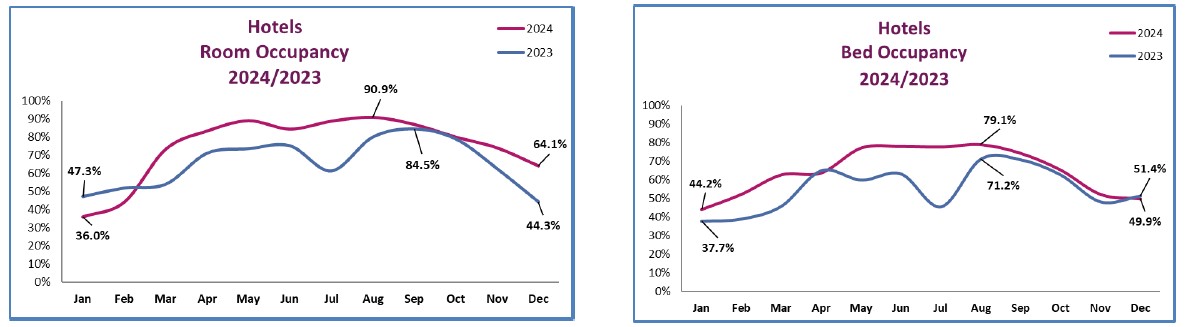
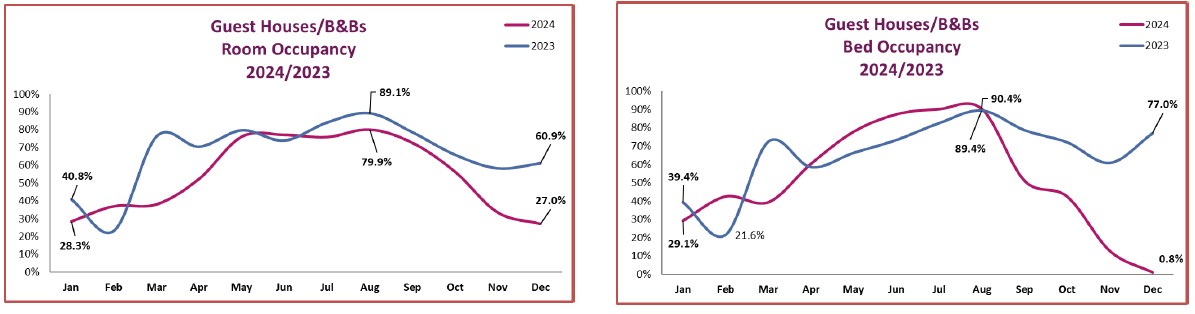
This cannot be guaranteed from May to late September. October was a consideration, but April was selected as it is a quiet period in the Scottish tourist industry. Figures 3 and 4 show that a surplus of accommodation is available in Scotland. This is confirmed in Figure 5, which demonstrates the average occupancy trends over the last five years in a B&B near Inveraray.
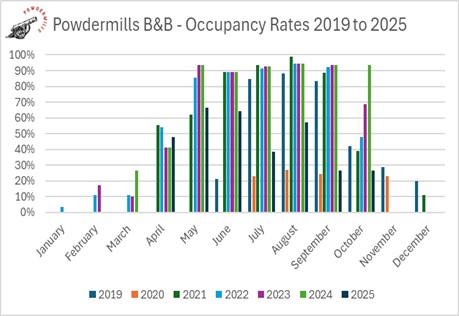
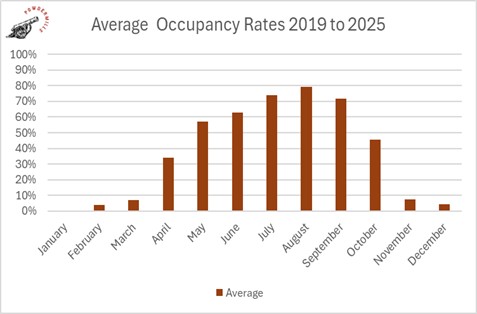
Another reason for opting for a festival date in April was that the target audience, school children and students, will be on Easter holidays. Moreover, with Easter weekend being from 2 to 4 April, the week after was selected as visitors were more likely to be available.
2.5 Target Audience
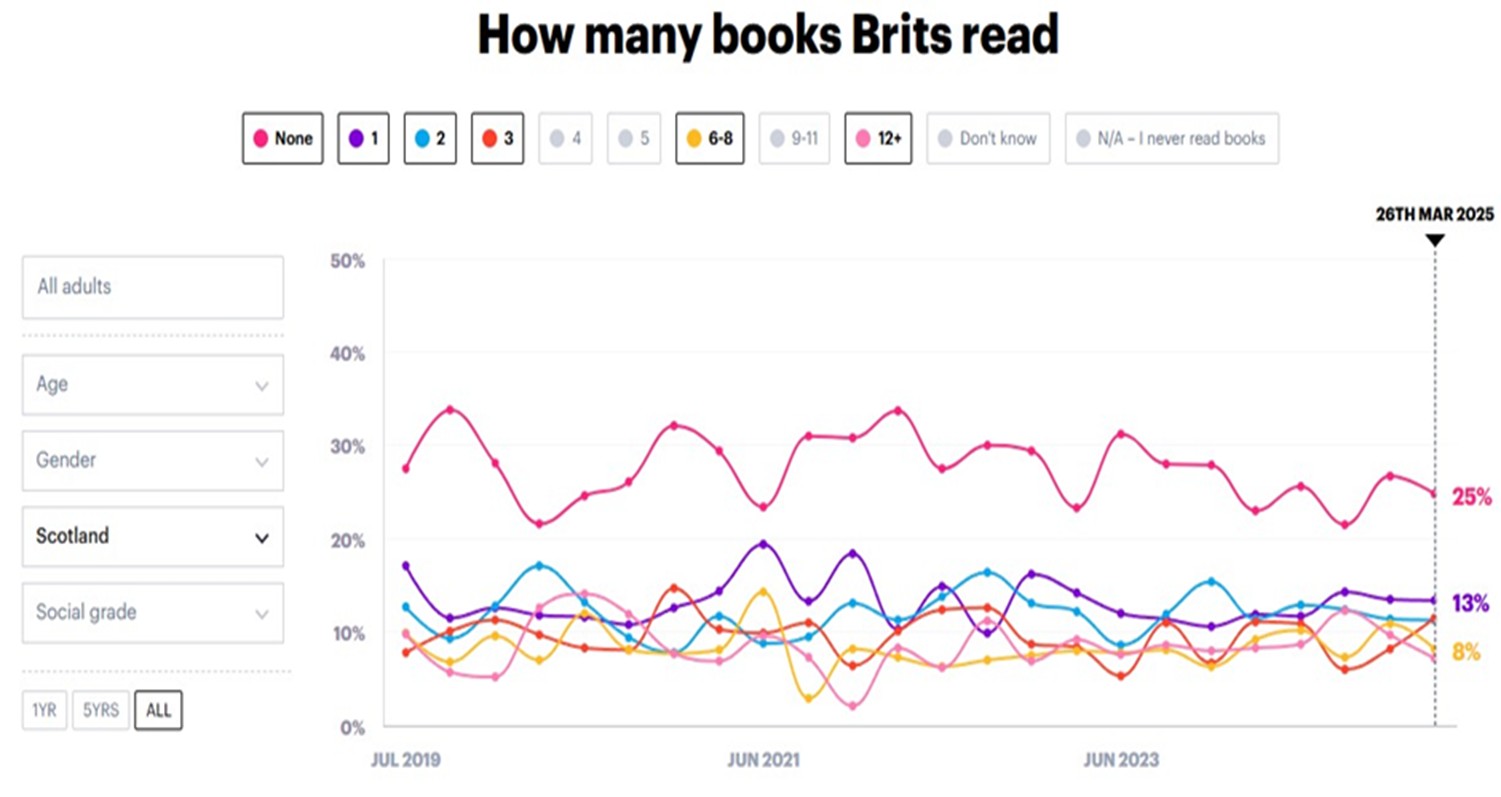
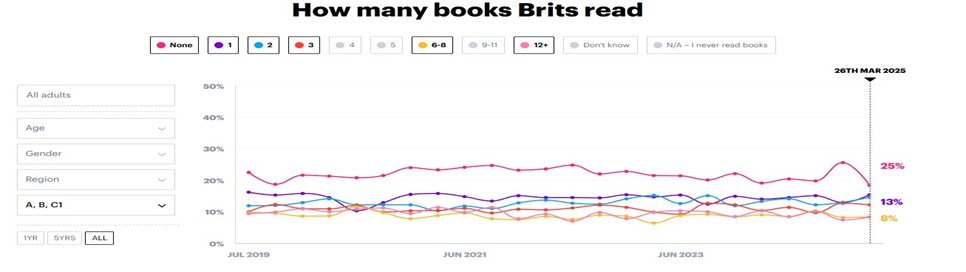
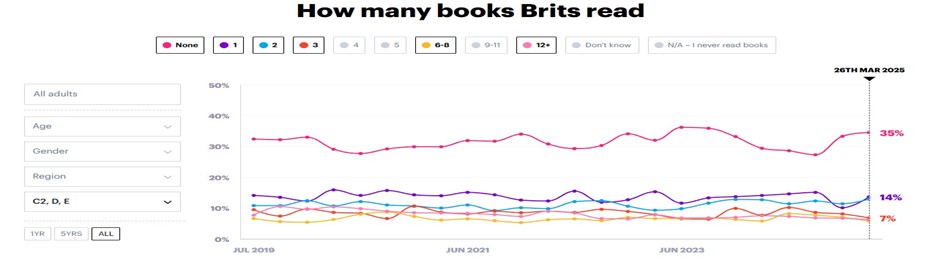
The target audience can be divided into two segments: those who attend the festival as contributors to the writing competitions and workshops, school children and young adults between 5 and 21, and older students studying creative writing. Students completing a creative writing degree will be targeted to attend and contribute as an avenue to show their work and better understand how the publishing world operates. (See Appendix 2) This cohort will come from diverse backgrounds. The other segment of Festival attendees will come from the general public who attend book festivals. There is a direct correlation between those who read more than average, those who attend book festivals, and the socioeconomic groups A, B, and C1. (Yougov, 2025) (See Appendices 7 & 8). However, research suggests that the middle class dominates this audience and is disproportionately represented by women. (Glow and Taylor, 2024) (Driscoll, 2014, p.162)
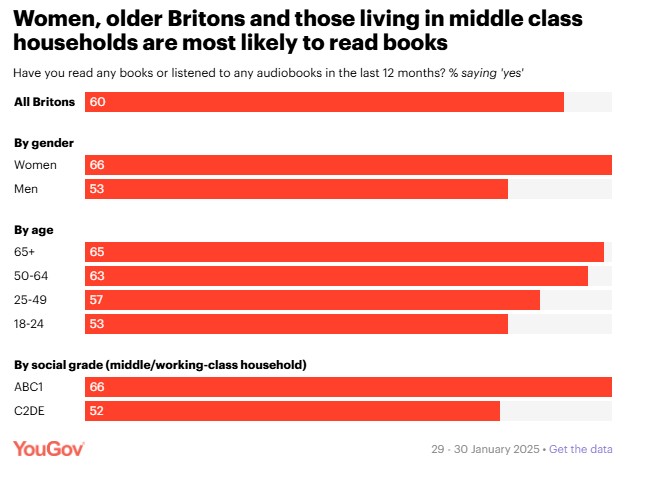
Research on reading habits tends to confirm this fact. Of the genders, women are also much more likely to be frequent readers than their male counterparts. Over a quarter (27%) of women read daily, compared to a sixth (13%) of men. Men are also less likely to be readers overall, with 22% saying they never read, compared to 12% of women. (YouGov, 2025) Including and targeting young writers from Argyll should attract a wider audience than the typical book festival demographic. These children will access the writing competitions and workshops through their schools, and when they attend the events, they will likely bring their parents and guardians, drawing in a more varied audience.
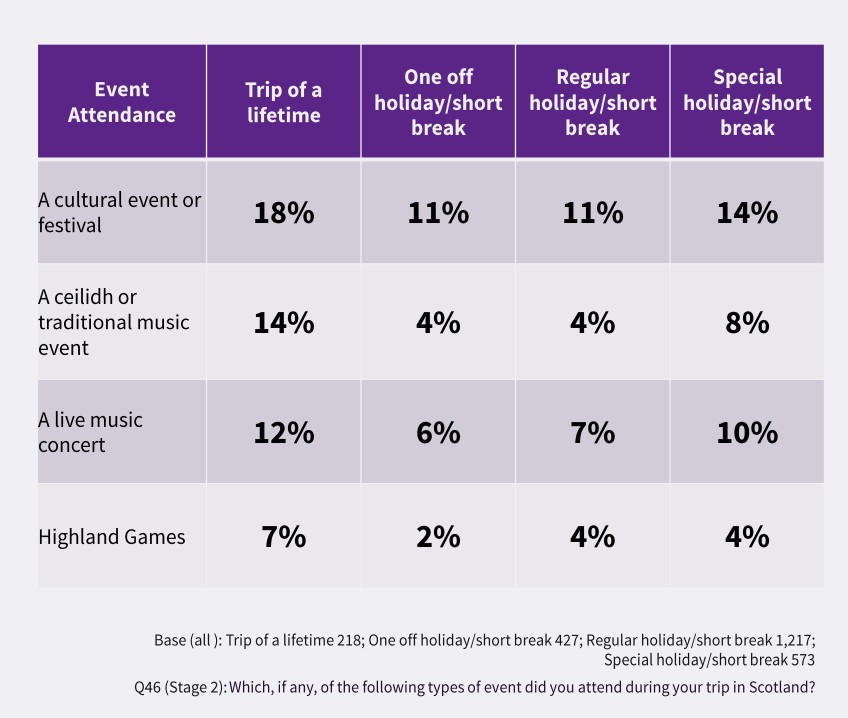
In addition, festival visitors from outside Scotland will likely be motivated to visit cultural events. (VisitScotland, 2023) Since Inveraray is a popular tourist destination, the demographic breakdown of these segments indicates a similar tendency to attend festivals across different age ranges. Visit Scotland categorises these groups as Prenesters, families, older independents and retirement age. All these groups of visitors from outside Argyll are likely to be attracted to attend the Festival. (see Appendices 5 and 6)
3. Marketing Plan
A marketing plan has been developed that has the following objectives:
- To communicate and promote the inique nature of this writing festival, which is educational and for unpublished authors of a ages.
- To promote the festival writing prizes to Argyll school children.
- Promote writing prizes to students enrolled in the Creative Writing course at colleges and universities in Scotland.
- To promote the dual themes of the festival – ‘Argyll’ and ‘the environment’.
- Establish the I Write Inveraray Festival in April 2026 to promote Inveraray as a cultural destination for creative writing.
- To engage the local community in the festival, particularly by using the community councils to fundraise and encourage involvement.
- To raise awareness of the charitable status of the festival and to communicate the workshops in the community throughout the year and at the festival.
- To raise awareness of the microgrants that will be made from surpluses to support writers based in Argyll.
3.1 Product
The Product is a three-day Festival called I Write Inveraray. The festival will be managed by a registered charity for the educational benefit of young and unpublished authors. The inaugural event will take place from 9-11 April 2026.
3.2 Place
The festival will be held in Inveraray, Argyll. The three venues to be used are the Nichol Hall, the George Hotel, and the Inveraray Inn.
3.3 Price
The festival will be free to all who want to attend. However, attendance will be limited by venue capacity. The I write Inveraray website will allow reservations to be made for events. Revenue will be raised to purchase a festival programme, and a nominal charge will be made for a five-minute spot for the Open Mic session.
3.4 Promotion
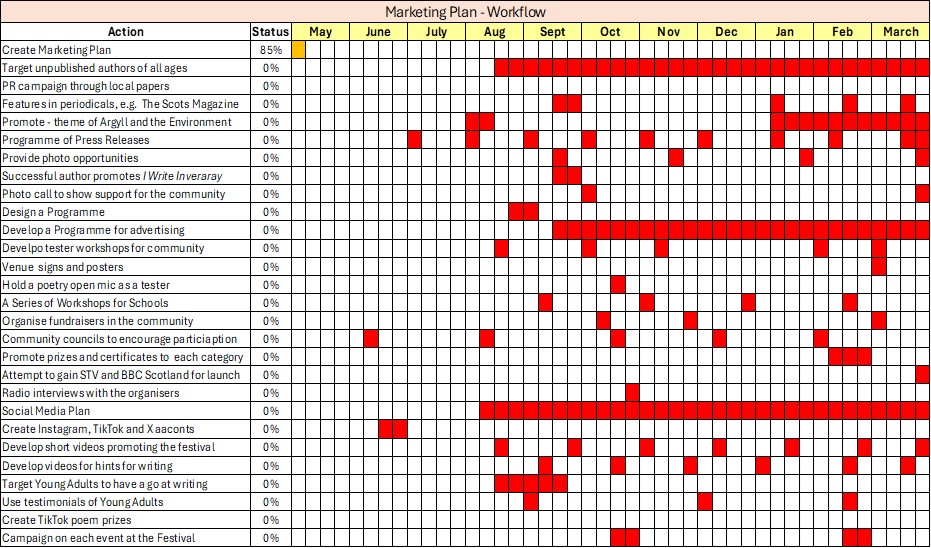
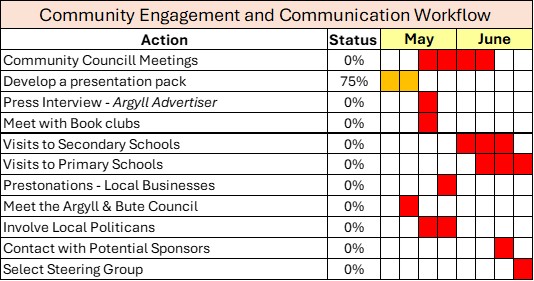
A detailed plan of promotion through local and national press has been developed. This involves a programme of activities, from fundraising to press releases, photo opportunities, placing articles, and a local strategy of achieving the core objectives of the marketing plan. (see Appendix 8) In addition, a social media campaign targeting young writers through videos on TikTok and Instagram has been devised. These videos will promote participation, with the tag ‘give writing a go’. Prizes for poems and flash fiction delivered through a video will be offered in the lead-up to the festival. (see Appendix 10)
4. Programme of Events
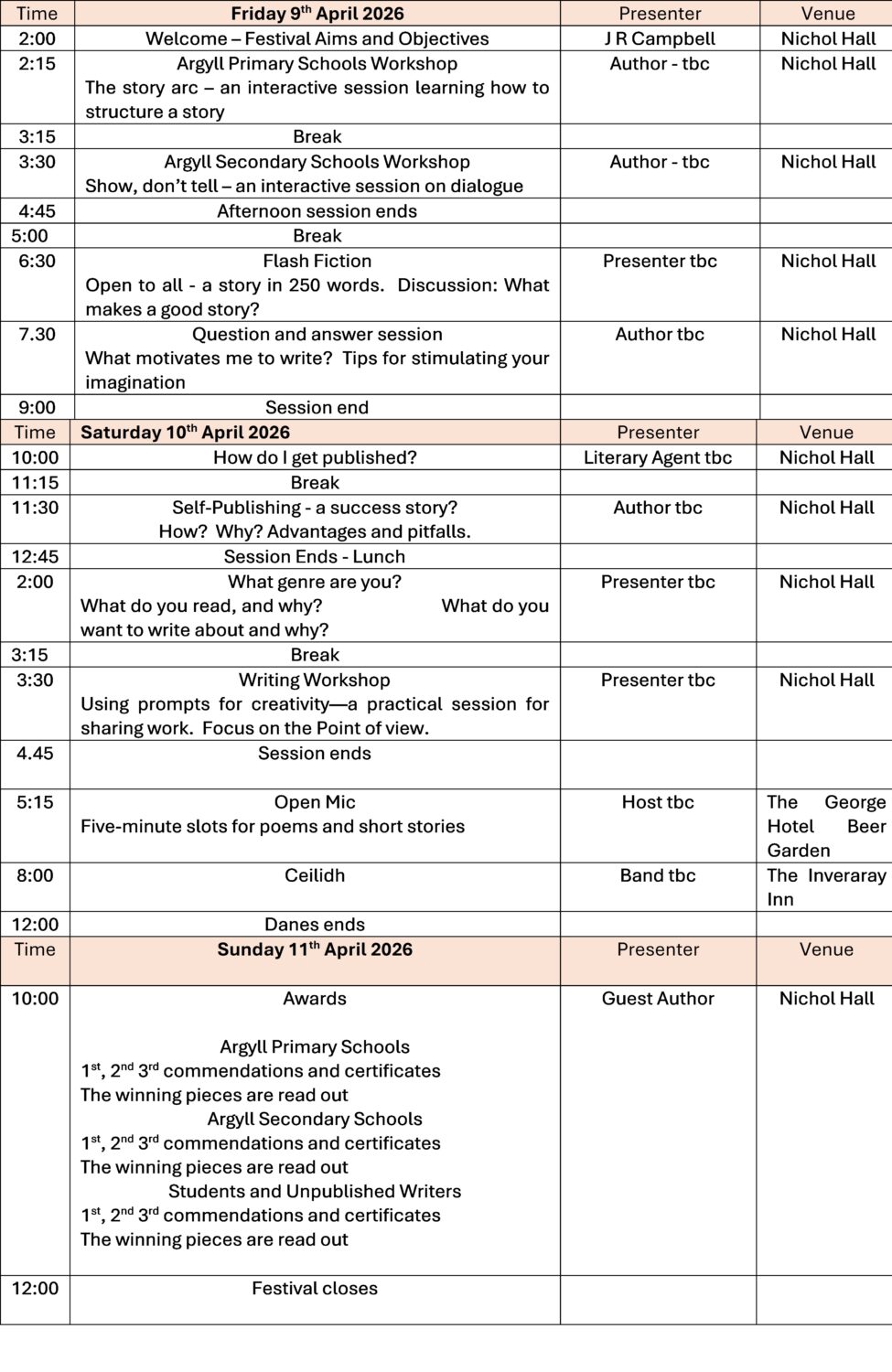
A provisional programme of events for I Write Inveraray has been designed. The session topics have been selected to be educational and not just book signings and question-and-answer set pieces with established authors. However, it is desirable to gain the support of famous Scottish writers for the festival through donations. Also, it would help promote the festival if one or two known authors were to be involved in the delivery of, I Write Inveraray. It is hoped that the unique nature of the event will encourage authors to participate. The schedule has been designed using the five dimensions of festivals. (Jordan, 2016, p. 6)
- Festivity – audience celebration and play.
- Experimentation – opportunities for audiences to try out new approaches.
- Spectacularising – opportunities for the audience to experience the highly visual or sensual.
- Theming – bringing together an audience that shares in a theme.
- Participation – encouraging participants to get involved and try it.
This criterion has been used to design the schedule for I Write Inveraray, which includes a traditional Scottish ceilidh on Saturday evening.
5. Budget
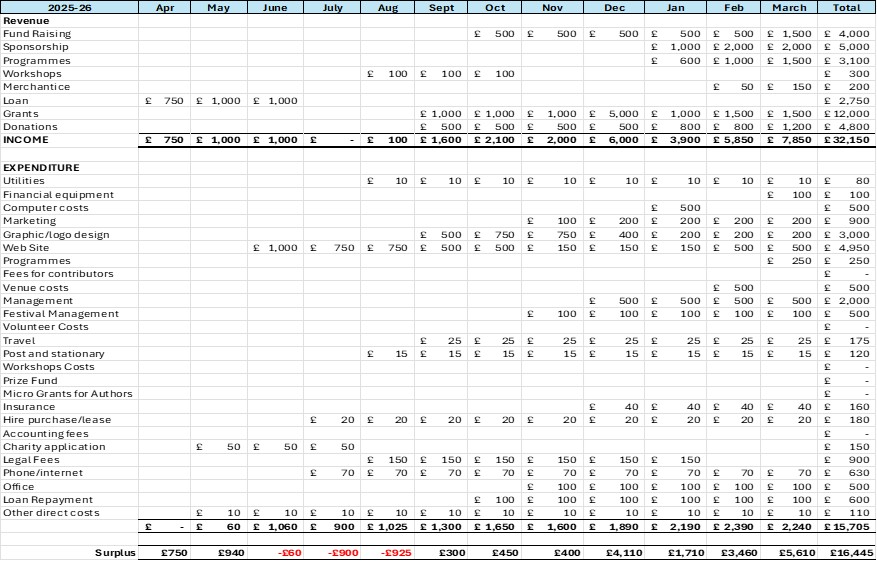
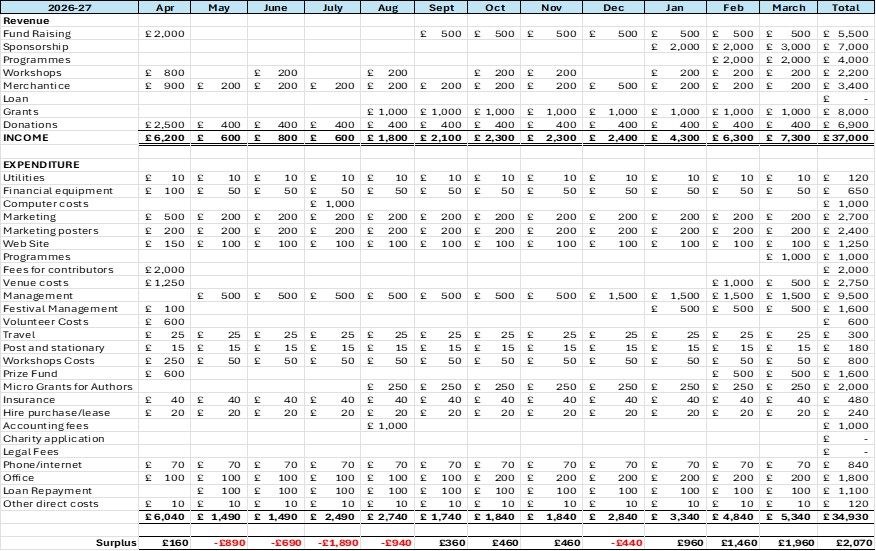
The budget has been prepared with only a 2% increase for inflation. A conservative approach to income and expenditure costs has been adopted. (See Appendix 14 & 15)
5.1 Income
Fundraising revenue has been based on the experience of previous events held in Argyll communities by community councils. These activities include race nights, bingo, and general knowledge events. Finding a major sponsor for I Write Inveraray is critical to viability. Figure 11 shows the Income budget with indications of the candidates for every fundraising aspect.
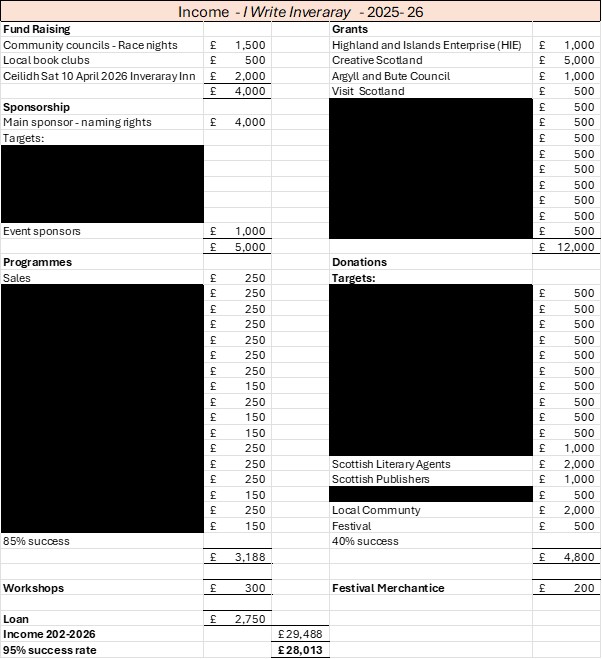
Creating a programme that will be sold at the festival provides a cost-effective way for local businesses to advertise while raising much-needed funds. This publication is envisaged to include poetry and prose, a schedule of the events, and an explanation of the charity’s strategy and objectives. Year 2 will include past winners’ prose or poems from the previous year.
Argyll is experiencing a boom in wind farm development, and these projects have already donated funds to the community through the community councils. Therefore, achieving this income through the wind farms is achievable. The festival’s ‘Argyll’ and ‘the environment’ themes closely align with these businesses’ strategic objectives. Nonetheless, the level of grants received in year 2 has been reduced by 33%.
The level of donations is harder to estimate. A plan to seek donations from a group of prominent Scottish authors is difficult to quantify, so these income flows have been discounted by 40%. The income from merchandising and workshops increases in year 2. The personal loan provides the cash to start the project, with repayment over three years, although it may be converted into a donation. Revenues are set to increase by 15% in year 2.
5.2 Expenditure
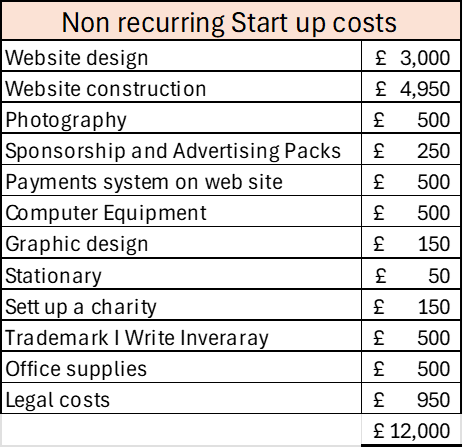
From the outset, there are three major costs. Firstly, the development of a website. This is essential for the festival’s success; the event is projected as professional and worthwhile. All other festivals have well-designed and informative websites. Fortunately, an existing relationship with Primitive Media, with an extensive track record in the development of websites, should provide a cost-effective solution. The website will provide functionality for submitting pieces for the competitions, a booking system for festival and event tickets, and merchandise sales. The design and creation of a brand will be aided by local artist.
In year 1, all management time is being provided by volunteers, but some travel costs will have to be paid during the event. However, in year 2, funds are being set aside to pay one or two part-time staff to build on the inaugural event’s success. Finally, costs for gaining charity status and legal fees have been included.
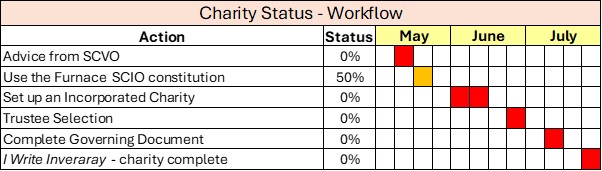
Finally, costs for gaining charity status and legal fees have been included. Again, the project will benefit from the experience of an individual who has created a charity for the local community of Furnace, and there are likely to be savings in these costs.
5.3 Cash Flow
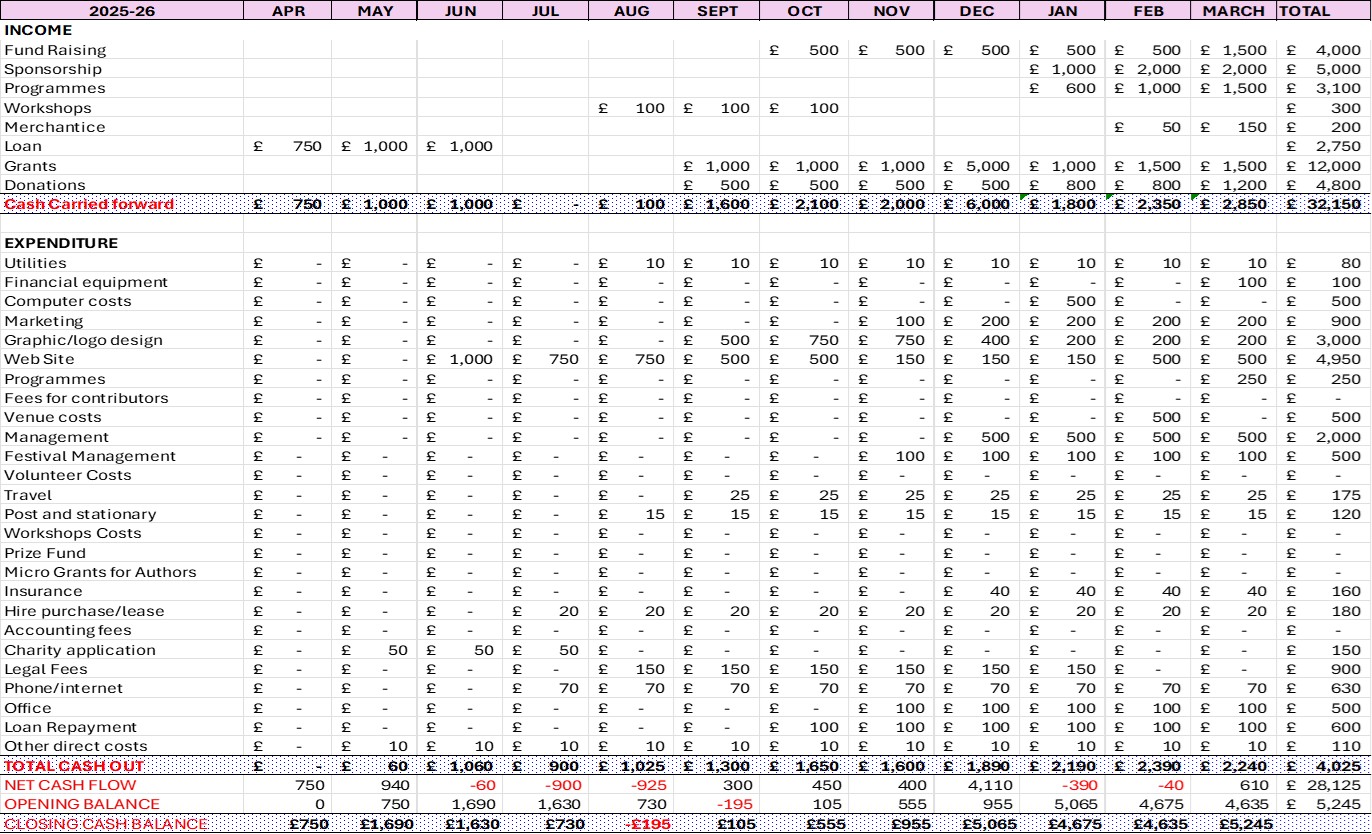
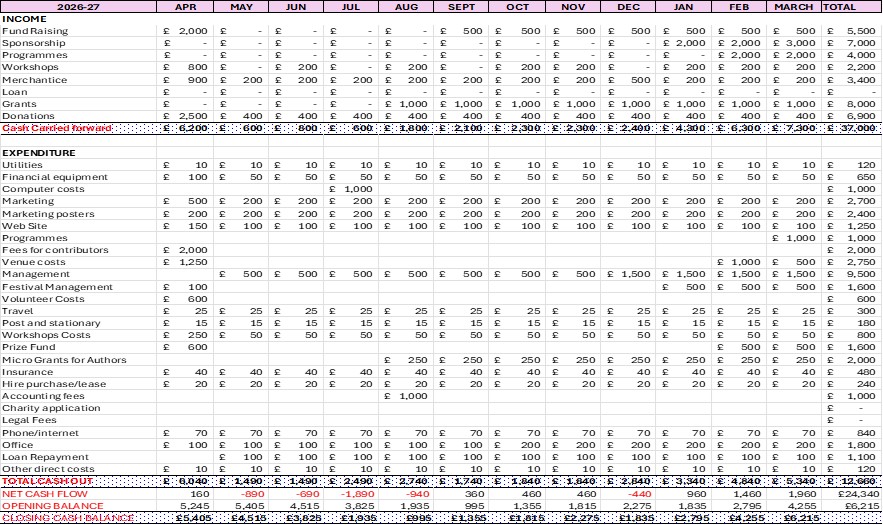
The cash flow has been developed to delay costs until funds, grants, and donations become available (see Appendices 13 and 14). The cash flow throughout the two years is tight, and a policy of only spending funds when cash is available will be required. This may mean that activities are curtailed or delayed. A loan to the charity is to be provided so that funds are available before grants from governmental authorities are received. A funding process needs to be completed, and this can be time-consuming. Therefore, raising revenue from donations from the local community and fundraising activities will be vital.
In year 2, microgrants are commenced but can only be paid if there is a solid cash flow from the charity’s activities. At the year-end in March 2026, a positive cash flow of £4,800 will be required to finance the festival in April. However, this is where an influx of cash will be received. Regardless, generating cash to fund activities will be challenging and require careful management.
6. Measuring Success and Contingency Plans
The proof of whether this project is successful will be if I Write Inveraray is held in April 2026. The event may take place, but if the festival does not meet its objectives to increase creative writing participation among schoolchildren in Argyll, university students, and unpublished authors, it will have failed. Therefore, Key Performance Indicators have been developed to ensure that the festival’s output can be measured using SMART objectives.
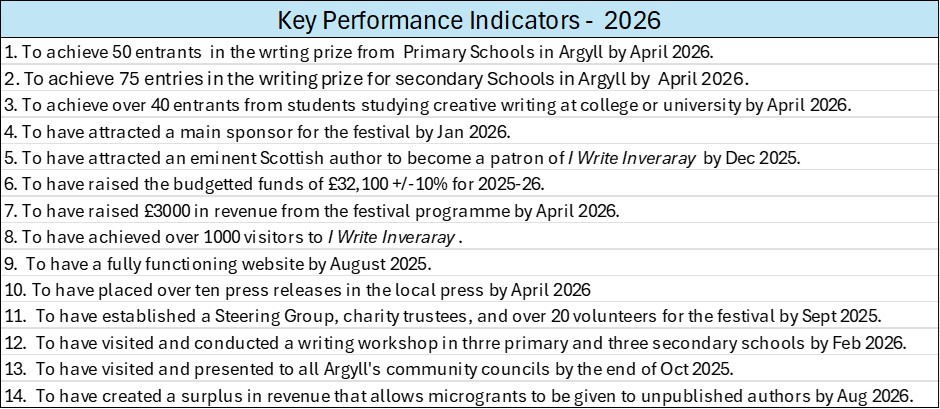
These objectives are specific, measurable, targeted, realistic, and time-bound. They also provide a mechanism for reviewing the charity, allowing the trustees to monitor progress.
6.2 Contingency Plans
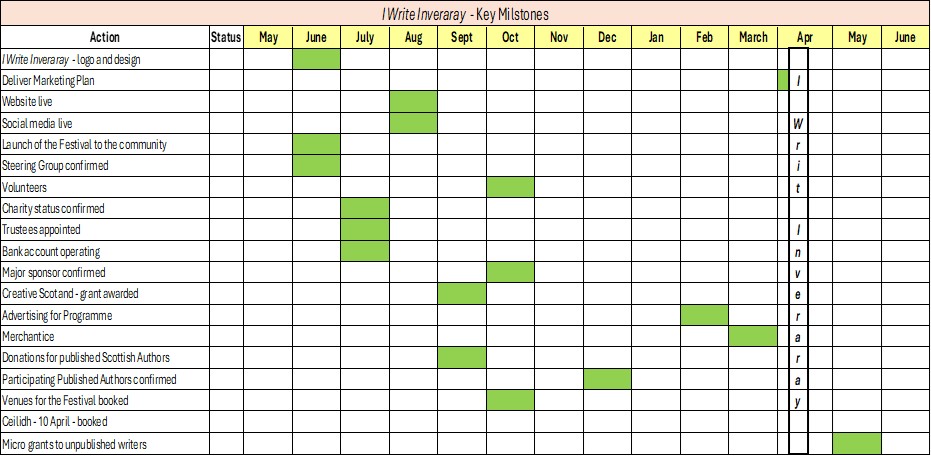
This project is challenging and could be hampered by a lack of funds due to delays in the application process with governmental bodies. Therefore, contingency plans must be implemented to modify or change the plan. The most obvious problem is that there will only be eleven months for implementation. Therefore, regular reviews on progress will be required so that scaling down the event for 2026 is considered or delaying it until 2027. The other weakness in the plan is manpower. No one is dedicated to delivering this plan, and success will rely on volunteers’ free time. A dedicated team that shares the vision and will work tirelessly to deliver I Write Inveraray in April 2026 must be developed.
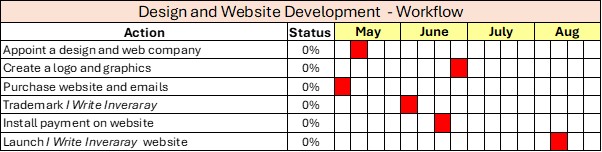
7. Project Plan
Appendix 1 – Book Festivals in Scotland
Appendix 2 – Competitions and Writing Courses for Young Adults
Appendix 3 – Primary and Secondary Schools in Argyll
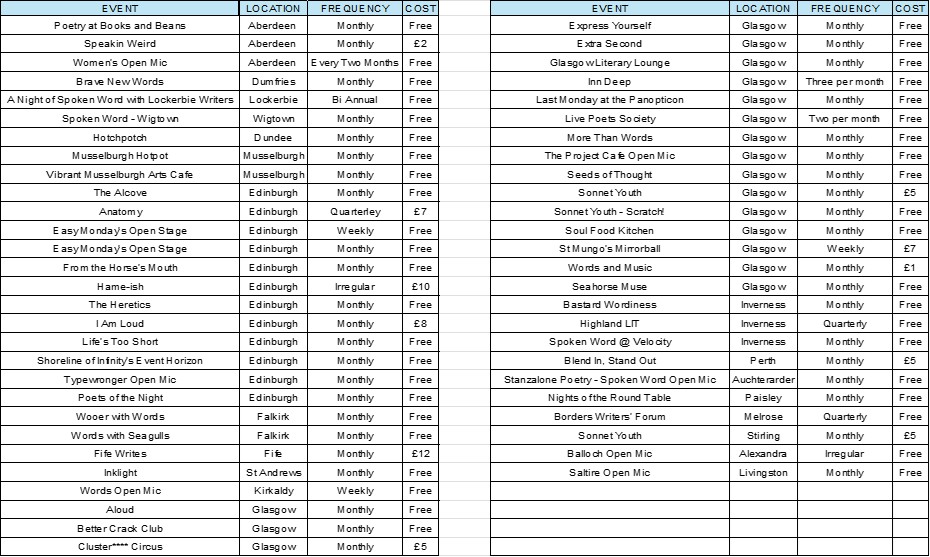
Appendix 4 – Open Mic Events in Scotland
Appendix 5 – Scotland as a Holiday Destination
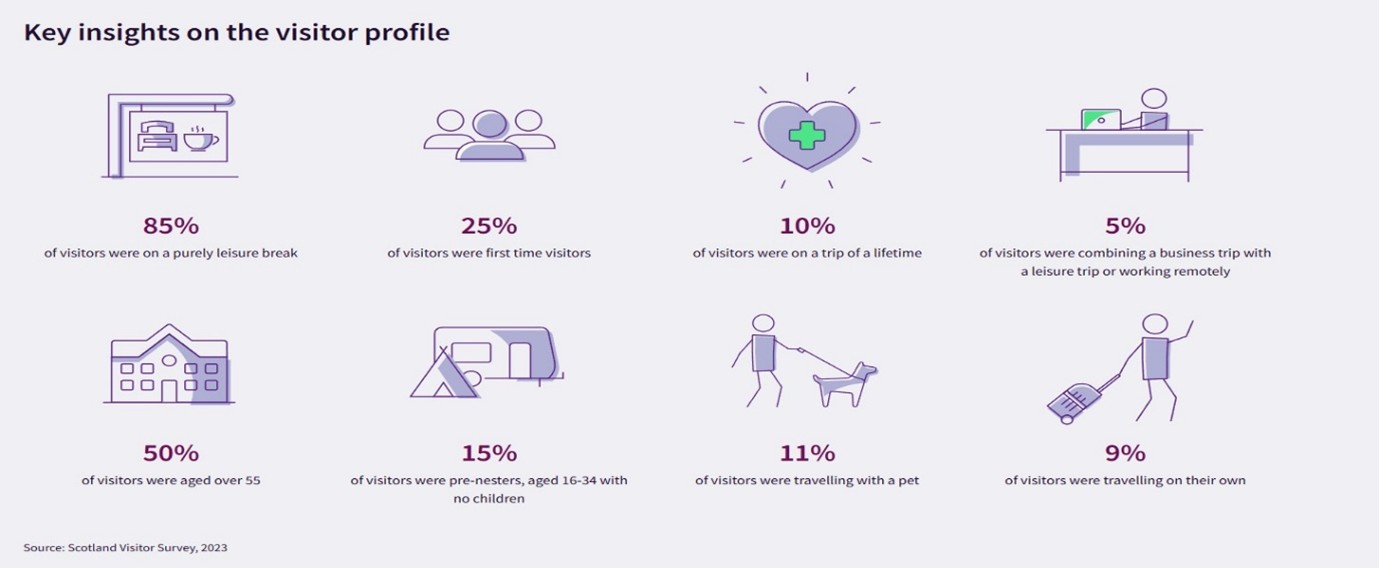
Appendix 6 – Demographics of Visitors to Scotland
Appendix 7 – YouGov – Reading n Scotland
Appendix 8 – Demographics and Social Grade of Readers in the UK
Appendix 9 -Marketing Action Plan
Appendix 10 – Workflows
Appendix 11 – I Write Inveraray – Budget 2025-26
Appendix 12 – I Write Inveraray – Budget 2026-27
Appendix 13 – I Write Inveraray – Cash Flow 2025-26
Appendix 14 – I Write Inveraray Cash Flow 2026-27
References
Antonik, D. (2016) ‘The Author as a brand’. Teksty Drugie, (2), pp.174-190.
Asero, V. and Tomaselli, V. (2019) The Impact of a Book Festival on a Destination’s Tourism Development. Athens Journal of Tourism, 6(3), pp.179-194.
Clark, J. and Rice, G. (2020). ‘Revitalising rural Scotland: Loch Fyne, branding and belonging.’ Journal of Place Management and Development, 13,1, pp.18-29.
Cove Park. (2025) Available at https://covepark.org/ (Accessed: 5 March 2025).
Creative Scotland. (2025) Available at https://www.creativescotland.com/resources-publications/guides-toolkits (Accessed:5 March 2025).
Highlands and Islands Enterprise. (2025) Creative Industries. Available at https://timeline.hie.co.uk/stories/creative-industries/ (Accessed: 5 March 2025).
Johanson, K. and Freeman, R. (2012) The reader as audience: The appeal of the writers’ festival to the contemporary audience. Continuum, 26(2), pp.303-314.
Johanson, K., Glow, H. and Taylor, M. (2024) Collecting and classifying data on audience identity: the cultural background of festival audiences. In A Reader on Audience Development and Cultural Policy (pp. 194-211). Routledge.
Jordan, J. (2016) ‘Festivalisation of cultural production: experimentation, spectacularisation and immersion’. Journal of Cultural Management and Policy, 6(1), pp.44-55.
Lu, Y. (2015) Lost in location: arts development and policy in rural Scotland. Unpublished PhD Thesis, University of Glasgow. Available at https://theses.gla.ac.uk/5899/1/2014LuYTphd.pdf (Accessed: 3 March 2025).
Marcella, R., Illingworth, L. and Baxter, G. (2008) ‘The creative industries in Scotland: flexible friends or foes?’. Cambridge Scholars Publishing.
McKerrell, S. and Hornabrook, J. 2022) ‘Mobilizing traditional music in the rural creative economy of Argyll and Bute, Scotland.’ Creative Industries Journal, 15,3, pp.237-256.
Munro, E. (2016) ‘Developing the rural creative economy from below’: exploring practices of market-building amongst creative entrepreneurs in rural and remote Scotland.’ M/C Journal, 19,3.
Oban and Lorn Writers. (2025) Aye Right. I Write. Join Us. Available at https://www.facebook.com/groups/2943231265949671/?hoisted_section_header_type=recently_seen&multi_permalinks=3925869207685867 Accessed 27 Feb 2025).
Driscoll, B. (2014) The new literary middlebrow: Tastemakers and reading in the twenty-first century. Springer.
Driscoll, B. and Squires, C. (2020) Experiments with book festival people (real and imaginary). Mémoires du livre, 11(2).Quinteiro, S., 2024. Working definitions in literature and tourism: a research guide. Universidade do Algarve, CIAC-Centro de Investigação em Artes e Comunicação.
Rossetti, G. and Quinn, B. (2019) Learning at literary festivals. Literary tourism: Theories, practice and case studies, pp. 93-105). Wallingford UK: Cab
Scottish Association of Writers. (2025) Find a Group Available at https://www.scottishassociationofwriters.com/find-a-writing-group/ Accessed:1 March 2025).
Scottish Book Trust. (2025) First Minister’s Reading Challenge Available at https://www.scottishbooktrust.com/reading-and-stories/first-ministers-reading-challenge (Accessed 1 March 2025).
Scottish Government. (2019) Creative industries: policy statement Available at https://www.gov.scot/publications/policy-statement-creative-industries/pages/2/ Accessed: 28 Feb 2025).
UK Geographics (2014) Social grade A, B, C1, C2, D, E Available at https://ukgeographics.co.uk/blog/social-grade-a-b-c1-c2-d-e (Accessed: 5 March 2025).
Weber, M. (2015) Conceptualizing audience experience at the literary festival. Continuum, 29(1), pp.84-96.
Weber, M. (2018) Literary festivals and contemporary book culture. Springer.
Wilks, L. (2013) The special challenges of marketing the arts festival. In D. O’Reilly, R. Rentschler and T. Kirchner (Eds.), Routledge companion to arts marketing (pp. 334-343). Abingdon: Routledge.
VisitScotland (2025) Accommodation In Scotland – occupancy statistics. Available from:https://www.visitscotland.org/research-insights/about-our-industry/accommodation Accessed: 20 April 2025)
YouGov (2020) What Are Common Reading Habits [online]. Available from: https://yougov.co.uk/topics/entertainment/articles-reports/2020/03/05/world-book-day-britons-reading-habits (Accessed: 19 April 2023]